
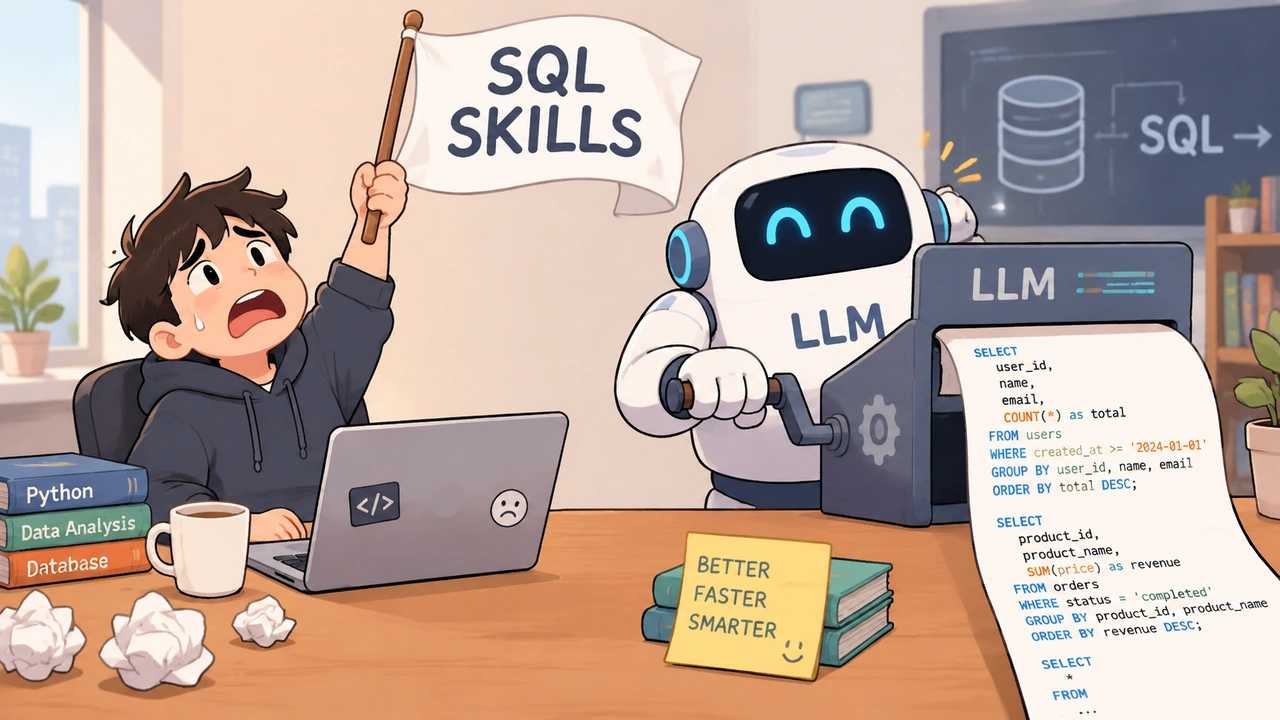
If you are a SQL analyst/coder, you are probably thinking of raising the white surrender flag to AI. After all, AI can now create databases, tables, indexes, queries, and anything else you can think of in SQL. There’s just one problem: AI often gets things wrong when it produces code.
It fails often enough that people don’t trust the output. It fails often enough that companies hold employees or personnel responsible for the AI’s output.
Based on that last sentence, since you are responsible and AI can be unreliable, do you really want to trust it to do the work?
Site owner may receive a commission from purchases made through links on this page, at no extra cost to you.
AI Creates Content Based on Its Training History
Much of AI’s training data comes from the Internet. Websites and web pages aren’t reliable, and AI will likely only realize that when pressed. AI often chooses the highest-probability option. Since much code isn’t written optimally, or even correctly, AI will often favor that code.
Related: Why Do Models Hallucinate?
There is more to how AI selects its output, but you don’t need to know that for this discussion. The main takeaway should be that you can’t trust AI’s output.
But that’s an interesting situation, isn’t it? If you aren’t familiar with the output that AI produces, or you don’t understand how to code in SQL, where does that leave you? You’ll be taking a big chance on AI getting it right, and you won’t know when to tell it it’s wrong.
A Delicate Balance
You don’t need to become a SQL expert, but you do need enough chops to make sense of the AI-produced code. Obviously, the stronger your skills here, the better. At the same time, the point of letting AI produce this code is that you don’t have to know it at an expert level.
Why They Keep Telling Us That AI Will Replace Our Jobs
Right now, we’re still in the AI boom’s hype cycle. The cycle is shifting away from the inflated-expectations stage, and we seem to be entering the disillusionment stage (companies are considering smaller models to cut inference costs, etc.). I would even say we may be at the Slope of Enlightenment stage, where we start to see productivity gains.
That said, our traditional jobs (including coding jobs) will change. We’ll likely wear the architect hat more than the coding hat, and we’ll also wear the QA hat. New hats will emerge, like Analytics Engineers, AI Specialists, and others yet to be defined. Most will require some SQL and database knowledge.
When to Raise the White Flag
I believe we will know it is game over when all the training companies stop offering SQL training. They’ll shift to skills more aligned with orchestrating workflows and pipelines, monitoring performance, and aligning business rules with the AI.
Until then, though, it pays to understand how SQL works and decide how far down the learning rabbit hole you want to go. As long as training vendors offer training on those skills, you can decide what works best for your needs.






Be First to Comment