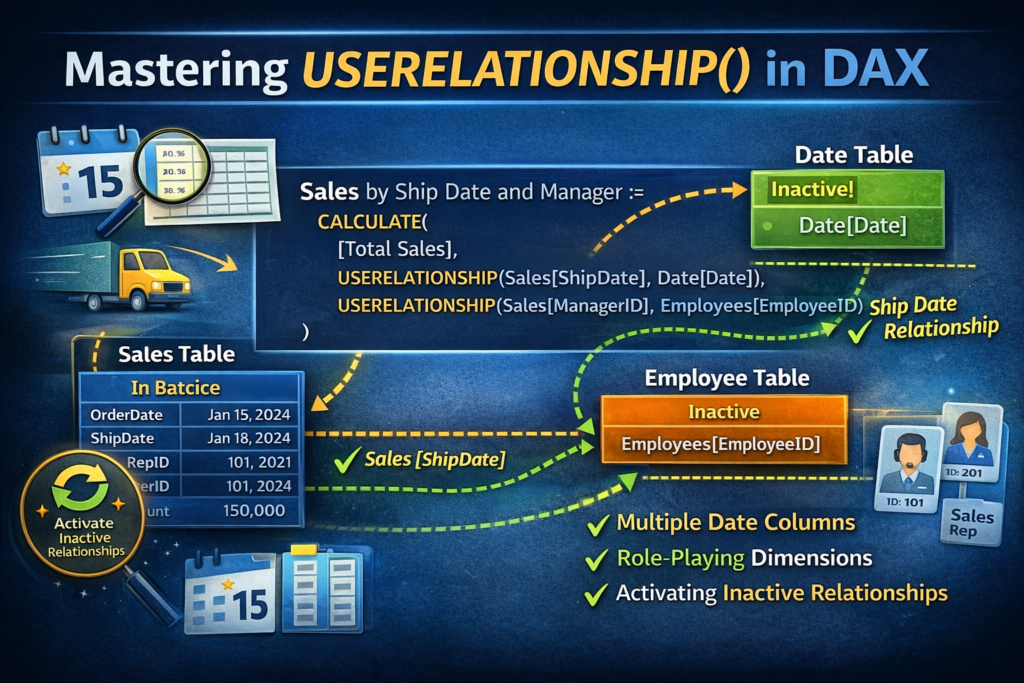
How to unlock alternate relationships and take full control of your data model’s behavior Power BI’s data model is built on relationships—those invisible highways that let filters flow from
Continue readingDo you struggle with DAX? If so, you’re not alone. The hardest part with DAX isn’t the syntax. It’s conceptualizing it mentally. What does “filter context” really mean? Why does a measure give
Continue reading
When I first started working with Power BI, I often heard that you could get by with just four core DAX measures: Total Sales, Total Cost, Total Profit, and Profit Margin. At the time, that advice felt
Continue reading
When analyzing data, analysts should adhere to best practices. Once such best practice is to use a star schema for the data. At its basic level, a star schema contains one or more fact tables, and several
Continue reading
I often work with annual reports, including financial statements for listed companies. I do it both for investing and for my job where I want to know the financial solvency of my clients and potential
Continue reading
At some point, you'll need to create lookup tables from data sources. Excel users often clump all entities together in each row. This is a natural way for them to view the data and it's the easiest
Continue reading
Course: Power BI - Up & Running with Power BI Desktop Instructor: Chris Dutton Platform: Udemy.com Price: Varies Rating: 5 Stars (out of 5) Summary If you are struggling to learn
Continue reading
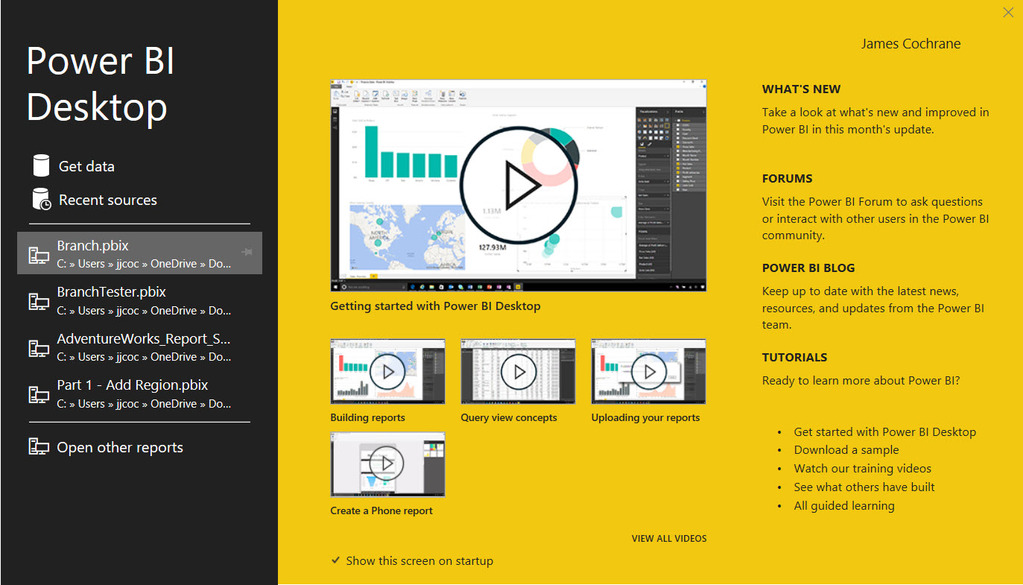
Power BI is an analytics program that helps people gain insights into data. It's not overly difficult to learn, but it has several powerful features that can make it overwhelming for newcomers. There
Continue reading
Power BI is an analysis tool created by Microsoft. It is part of a class of software tools known as self-service business intelligence tools, which means that it is supposed to be easier than most analytics-based
Continue reading
R is a popular language for data science, although recently Python is winning the language wars. Still, R has its proponents (yours truly) and will continue in its use throughout the data science community.
Continue reading